Trickle Down Economics
It doesn’t take a genius to debunk so-called “trickle-down” economics. Championed by Ronald Regan and modern day neo-nazis, this economic theory is famous for being meticulously debunked. In fact, the theory has never materialized into tangible benefits that alleviate the real concerns of the average worker.
On the other hand, trickle-down economics is known to create ultra-wealthy individuals. In fact, since Reaganomics, the US now has over 900 billionaires, all created from the practice of trickle-down economics.
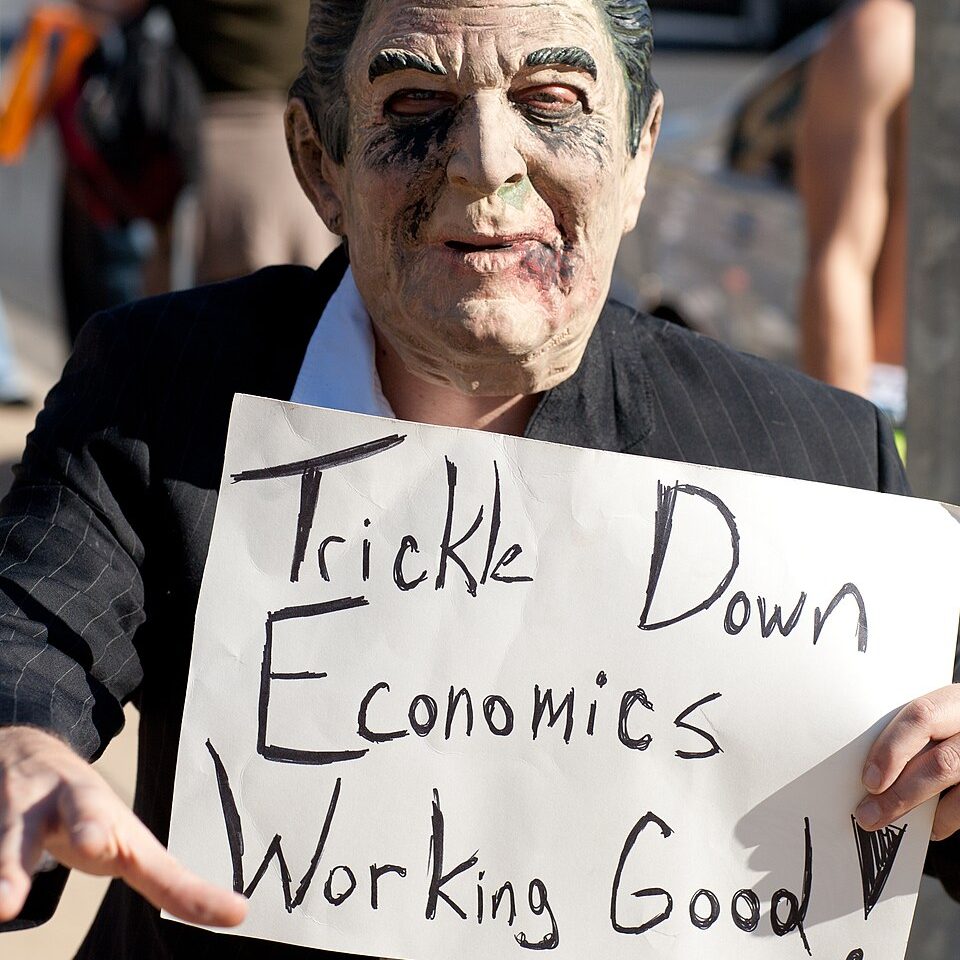
One meme sums up the entire theory and how it works:

In election after election, billionaires manage to convince hordes of poor people to vote directly against their own interests by supporting bills and candidates that will reduce taxes on the wealthy. Upper-middle-class citizens are also persuaded to vote with the billionaires, based on the fantasy that they, too, might become ultra-wealthy someday and will not want to pay so many taxes. God forbid we use the wealth created by society to enrich the workers who build and maintain organized society.
As the pressures of capitalism push more and more families out of the middle class and into poverty, more billionaires are ripening on the vine. It’s looking like a full harvest of the billionaire class is inevitable and fast-approaching. Just look at how much more we’ve produced, compared to what we’ve been paid:
To compete fairly with the billionaire class, you need to arm yourself with a basic understanding of inflation and learn more about the historically preferred method of harvesting the ultra-wealthy: le guillotine. If you’re ready to dive right in and start eating the rich, head on over to The Butcher Shop to find the resources you need to start advocating!
If you made it this far and haven’t figured out that this website is satire, please click here to learn more.